
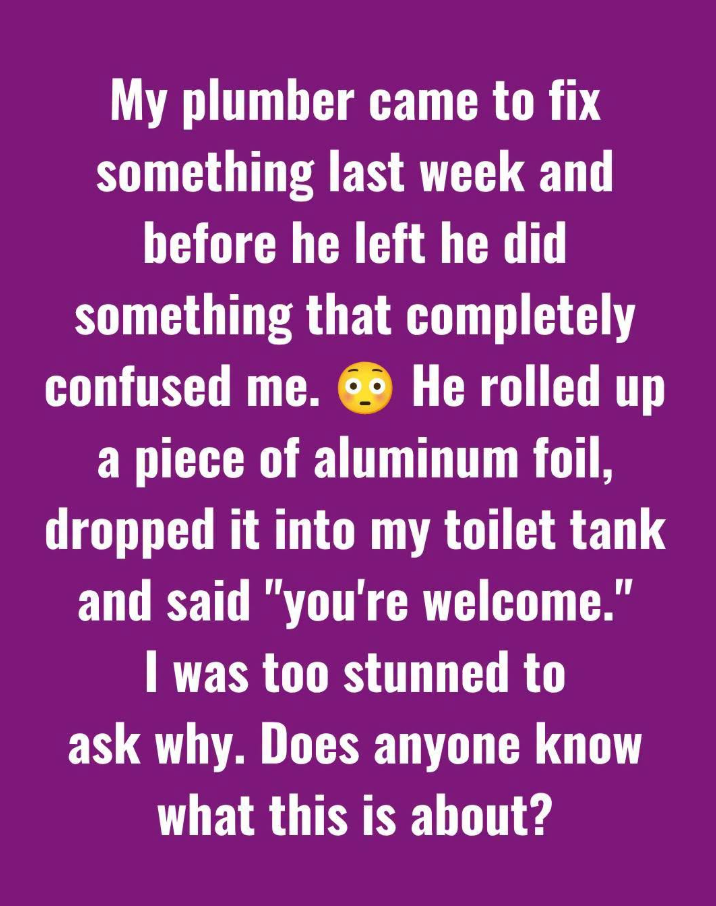
You’ve probably seen the videos by now. Someone rolls a small piece of aluminum foil into a ball, drops it into a toilet tank, and claims this simple kitchen trick can prevent rust, reduce water bills, stop leaks, and even keep the toilet bowl cleaner.
It sounds almost too easy, doesn’t it?
After all, who wouldn’t love a simple household hack that saves money, cuts down on cleaning, and helps keep the bathroom fresh without spending a fortune on special products?
That’s exactly why this trend has attracted so
much attention on social media. The idea is inexpensive, easy to try, and presented as one of those clever tricks that professional cleaners supposedly don’t want you to know about.
But before you reach for that roll of foil, there’s something important to understand: there’s no good evidence that placing aluminum foil in your toilet tank delivers the benefits these viral videos promise.
In fact, putting an unnecessary object inside a toilet tank could interfere with its moving parts, depending on where it lands.
So, what’s really happening here? Does
aluminum foil actually prevent rust? Can it stop a running toilet? And is there a better way to deal with stubborn stains or rising water bills?
Let’s separate internet claims from practical plumbing advice and look at what you should do instead.
Why Did the Aluminum Foil Toilet Hack Go Viral?
It’s easy to understand the appeal of this trick.
Aluminum foil is inexpensive, readily available, and useful for plenty of household tasks. We use it to wrap food, cover baking dishes, and, in certain situations, help clean tarnished silver
or scrub particular metal surfaces.
Because aluminum participates in some chemical reactions, it isn’t difficult to see how someone might assume that a ball of foil could help remove rust or mineral buildup inside a toilet tank.
Social media also rewards ideas that look surprising and promise immediate results. A quick video showing someone dropping foil into a tank is easy to film, easy to share, and intriguing enough to make viewers curious.
But there’s a catch.
A material that works for one cleaning task doesn’t automatically work in another.
For example, using foil directly to scrub a suitable metal surface is very different from leaving a ball of foil submerged in toilet tank water. The conditions, materials, and mechanisms involved are not the same.
And when a video shows a toilet flushing normally after the foil is added, that doesn’t demonstrate that the toilet is cleaner, more efficient, or less likely to leak.
To establish those benefits, the method would need to be tested properly.
What Does Aluminum Foil in a Toilet Tank Actually Do?
The short answer? Usually,
nothing useful.
A typical toilet tank contains several components that work together to refill the tank and release water into the bowl when you flush.
Depending on the toilet design, these components may include:
A fill valve that replenishes the water after flushing
A float that helps regulate the water level
A flush valve that releases water into the bowl
A flapper or other sealing mechanism that prevents water from leaking out of the tank
An overflow tube that helps prevent the tank from overfilling
Each part has a specific
job.
A ball of aluminum foil doesn’t repair any of these components, adjust the water level, improve a worn seal, or clean the toilet bowl.
Depending on where the foil settles, it might simply sit at the bottom of the tank or move around with the water.
The greater concern is that an unnecessary object could become lodged against a moving component or interfere with normal operation.
That doesn’t mean every piece of foil will cause damage, but there is little reason to take the risk when the trick has
no established maintenance benefit.
Now, let’s look at the most common claims one by one.
Does Aluminum Foil in the Toilet Tank Prevent Rust?
Does Aluminum Foil in the Toilet Tank Prevent Rust?
This is one of the claims that makes the hack sound surprisingly scientific.
Some videos suggest that aluminum foil can prevent rust or remove existing rust stains because aluminum behaves differently from iron when exposed to certain chemical conditions.
There is a real scientific principle behind some aluminum-and-rust cleaning techniques. However, that doesn’t mean a ball of
foil will prevent rust inside a toilet tank.
Why the Claim Doesn’t Hold Up
Rust forms when iron or steel reacts with oxygen and moisture under suitable conditions.
Aluminum behaves differently because it normally develops a thin protective oxide layer on its surface. Under certain circumstances, aluminum can participate in reactions involving other metals, but the result depends on the materials and conditions involved.
Simply dropping aluminum foil into a tank of water does not create a reliable rust-prevention system.
It won’t repair corroding metal components, remove existing mineral deposits,
or stop rust-colored water from entering the toilet.
What Should You Do Instead?
If you notice reddish-brown stains in your toilet tank or bowl, first try to identify the source.
Possible causes include iron in the water supply, corrosion in plumbing components, or mineral deposits that trap discoloration.
Depending on the cause, you may need an appropriate toilet cleaner, a plumbing inspection, or water testing.
If you see significant corrosion inside the tank, avoid scrubbing components aggressively or applying harsh chemicals without checking whether they’re compatible with the toilet’s materials.
The key is to treat the actual cause rather than relying on foil to solve a problem it hasn’t been shown to fix.
Can Aluminum Foil Reduce Your Water Bill?
Another popular claim is that placing foil in the tank somehow helps a toilet use less water.
This is misleading.
Toilets use water according to their design and flushing mechanism. The amount used depends on factors such as the toilet’s flush rating, the water level, and how the flush valve operates.
A small ball of foil doesn’t meaningfully change the
toilet’s water efficiency.
Even if an object displaces a little water, that doesn’t automatically translate into a useful reduction in water consumption. A toilet needs an appropriate amount of water to flush effectively, and interfering with its operation can create more problems than it solves.
How to Actually Save Water
If you’re trying to reduce your water bill, these steps are much more effective:
Check for silent leaks. A leaking flapper or faulty flush valve can allow water to escape from the tank into the bowl continuously.
Inspect the fill
valve. If the tank keeps refilling when nobody has flushed, the valve or another component may need attention.
Check the overflow tube. Water continually entering the overflow tube may indicate that the fill level or fill valve needs adjustment.
Consider a water-efficient toilet. If your toilet is old and uses more water than modern models, replacing it may provide long-term savings.
Use a proper dual-flush system where appropriate. A suitable dual-flush toilet can offer different flush volumes for different needs.
Avoid placing random objects in the tank to displace water.
The toilet’s flushing system needs to operate as designed.
Can Aluminum Foil Stop a Running Toilet?
Let’s clear this one up right away: aluminum foil cannot repair a running toilet.
A toilet that continues to run after flushing usually has a mechanical issue.
Common causes include:
A worn or damaged flapper
A flush valve that doesn’t seal properly
A fill valve that isn’t shutting off
An incorrectly adjusted float
A chain that is too tight or tangled
Water entering the overflow tube because the tank is overfilling
These problems allow
water to move through the toilet when it should have stopped.
A piece of aluminum foil cannot restore a worn rubber seal or repair a faulty valve.
How to Check for a Toilet Leak
If you suspect a leak, try this simple test.
Remove the toilet tank lid carefully and look for water continually flowing into the overflow tube.
Listen for occasional refilling when nobody has used the toilet.
Add a few drops of food coloring to the tank water without flushing.
Wait about 10–15 minutes, keeping the toilet unused.
Check whether colored water has appeared in the bowl.
If the color reaches the bowl without flushing, water may be leaking past the flush valve or flapper.
This test can help identify a possible leak, although it won’t diagnose every plumbing problem.
If the toilet continues to run, inspect the relevant components or contact a plumber.
A simple replacement flapper may be all that’s needed, depending on the toilet model.
Does Aluminum Foil Clean the Toilet Bowl Automatically?
This is another appealing promise: drop foil into the tank, and somehow
the toilet bowl stays cleaner.
Unfortunately, there’s no good evidence that this works.
Aluminum foil isn’t a toilet-cleaning product. It doesn’t contain the surfactants, acids, disinfectants, or other cleaning ingredients found in products formulated to remove particular types of stains or deposits.
Simply sitting in the tank doesn’t give foil a reliable way to dissolve mineral buildup, remove grime, or disinfect the bowl.
Why Toilet Stains Appear
Different stains require different approaches.
Hard-water deposits: Minerals in the water can accumulate and leave chalky or crusty marks.
Rust-colored stains: Iron in
the water or corrosion in plumbing components may be responsible.
Organic buildup: Residue and microorganisms can contribute to discoloration, particularly when cleaning is infrequent.
Persistent dark marks: These may have several causes and sometimes require a closer inspection.
The right cleaning method depends on what’s causing the stain.
A Better Way to Clean Your Toilet
For routine maintenance, use a toilet cleaner appropriate for your toilet and the type of buildup you’re dealing with.
Apply it according to the label, allow the recommended contact time, scrub with a toilet brush,
and flush as directed.
For stubborn mineral deposits, choose a product specifically formulated for hard-water buildup and follow the manufacturer’s instructions.
Never mix bleach with acidic toilet cleaners or other incompatible cleaning products. Mixing cleaning chemicals can release dangerous gases.
And if stains keep returning quickly, investigate the water supply or plumbing rather than repeatedly treating the symptoms.
Can Aluminum Foil Keep the Toilet Fresher for Longer?
Some viral posts suggest that foil somehow neutralizes odors or keeps the toilet smelling clean.
But aluminum foil isn’t a deodorizer.
It doesn’t
Clean areas where moisture and residue tend to accumulate.
Investigate persistent sewage-like odors instead of masking them with fragrance.
If the smell resembles sewage and continues despite cleaning, consider contacting a plumber. The cause may involve the drain, a venting problem, or a compromised seal.
A fresh-smelling bathroom starts with finding the source of the odor—not putting foil in the tank.
Could Aluminum Foil Damage Your Toilet?
It depends on where the foil ends up and how the toilet is designed.
A small piece of foil sitting harmlessly at the
bottom of a tank may not cause an immediate problem. However, leaving foreign objects inside a mechanism that relies on moving parts and reliable seals is unnecessary.
Potential concerns include:
Interference with the movement of the float or fill mechanism
Obstruction around a valve or other component
Complications during maintenance or repairs
Misleading confidence that a plumbing problem has been fixed
The most important point is that the hack offers no established benefit to justify introducing an object into the tank.
If you’ve already put foil in your toilet tank,
don’t panic. If it’s easy to retrieve, remove it carefully without forcing or bending any components. If it’s caught near a valve or you can’t remove it safely, stop and seek help from a qualified plumber.
Never reach into the tank while the toilet is operating, and avoid pulling on parts you don’t understand.
What If You’ve Already Tried the Aluminum Foil Hack?
If you’ve already dropped foil into your toilet tank, there’s no need to assume that damage has occurred.
Here’s what to do.
Step 1: Inspect the Tank



Comments