
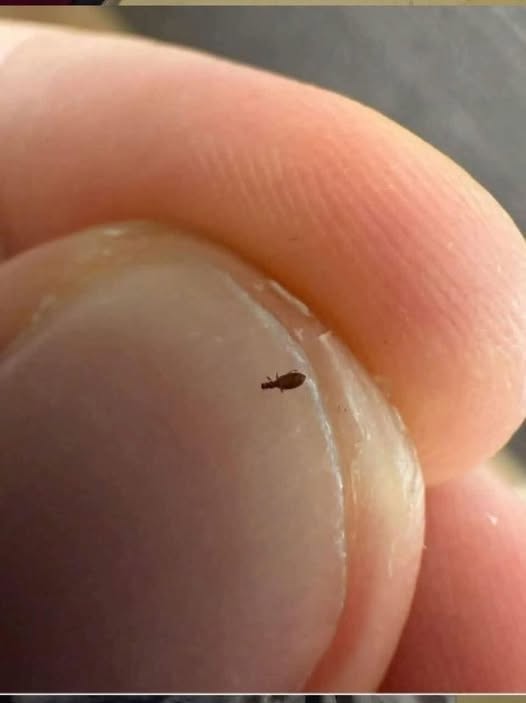
Bug Found in My Friend’s Hair: What Is It? A Calm Guide to Identifying an Unfamiliar Speck in Your Friend’s Hair It is completely natural to feel a sudden spike of anxiety when you spot an unfamiliar speck in someone’s hair. However, the first and most important step is to take a deep breath.
Without a close visual inspection, it is difficult to identify the object with certainty. More importantly, not everything found in hair is head lice. Small particles, insects, and pieces of debris can look surprisingly similar to the naked eye.
The Reality of Hair Intruders Human hair can easily trap or collect small particles from the environment. Before assuming the worst, consider some of the common possibilities.
Ants can occasionally become tangled in someone’s hair, especially after spending time outdoors, near food, or around plants. Small spiders and other tiny insects may also accidentally end up in the hair without actually living there.
Fleas are another possibility, although they generally live on animals or in carpets and other environments rather than permanently living in human hair.
Bed bug nymphs can also cause concern, but bed bugs typically hide in mattresses, furniture, clothing, and other areas rather than living in human hair.
And sometimes what looks like a bug isn’t a bug at all.
A piece of lint, a small plant seed, dried hair product, dust, or another piece of environmental debris can become caught between strands of hair and resemble a tiny insect.
A Calm, Step-by-Step Check Before assuming that your friend has head lice, consider a few simple observations.
Did It Move? Pay attention to how the object moved.
Head lice do not have wings and cannot jump. They move by crawling through the hair.
If the object suddenly jumped away, it is unlikely to be a head louse.
If it crawled, look at its movement more closely. Head lice generally move by crawling rather than darting rapidly.
Was There Only One? Finding a single unidentified insect does not automatically mean there is a lice infestation.
A stray insect or piece of debris can easily become trapped in someone’s hair.
However, the absence of multiple insects does not completely rule out lice either, so other signs should also be checked.
Is There Persistent Itching? Head lice can cause itching because some people develop an allergic reaction to bites.
However, itching alone does not prove that someone has lice. Dry skin, dandruff, irritation from hair products, allergies, and other scalp conditions can also cause itching.
If persistent itching is accompanied by visible lice or eggs attached to the hair, further inspection is appropriate.
What Do Head Lice Actually Look Like? Adult head lice are small, wingless insects approximately the size of a sesame seed.
They are usually grayish, tan, or brownish and have a flattened body with legs adapted for gripping hair.
They crawl rather than jump or fly.
What About Nits? Head-lice eggs are called nits.
Nits are attached firmly to individual hair shafts, usually close to the scalp. Unlike dandruff or loose debris, they do not usually brush or flick away easily.
This difference can be helpful when trying to distinguish suspected nits from ordinary flakes or debris.
How to Check More Carefully If you are concerned that the object could be a louse or nit, inspect the hair under bright light.
A fine-toothed lice comb can also be useful when checking wet, conditioned hair.
Pay particular attention to the hair close to the scalp, especially around the ears and the back of the neck.
If you find live crawling insects or objects firmly attached to the hair shafts, consider asking a healthcare professional or pharmacist for guidance.
What If You’re Still Unsure? Don’t panic.
Take a clear, well-lit photograph of the object if possible. A close-up image can make identification much easier.
If there are repeated findings, persistent itching, or suspected lice, professional confirmation is the safest way to determine what you’re dealing with before starting treatment.
The Bottom Line Finding a tiny object in someone’s hair can be alarming, but not every mysterious speck is head lice.
It could be an accidental insect, plant material, lint, dried hair product, dust, or another harmless piece of debris.
Look for movement, check whether anything is firmly attached to the hair, and examine the scalp and hair carefully.
When in doubt, get the object properly identified rather than assuming the worst.



Comments